When business owners examine their marketing budget, one question inevitably arises: “Is SEO worth the investment?” Understanding where to allocate your resources becomes crucial for sustainable growth with digital marketing channels multiplying and advertising costs rising. This guide breaks down everything you need to know about SEO investment, from pricing considerations to measuring returns.
Understanding SEO Investment: What Are You Really Paying For?
Search Engine Optimization (SEO) represents a fundamental component of digital marketing that focuses on improving your website’s visibility in organic search results. But what exactly constitutes an SEO budget?
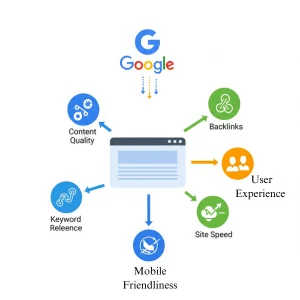
SEO investment covers various specialized services designed to improve your site’s performance in search engines:
- Technical optimization: Ensuring your website functions properly for both users and search engine crawlers
- On-page optimization: Refining content and HTML elements to target relevant keywords
- Off-page strategies: Building authority through backlinks and brand mentions
- Content creation: Developing valuable, search-optimized content that attracts and engages users
- Local SEO: Enhancing visibility for location-based searches
- Analytics and reporting: Tracking performance and making data-driven adjustments
What is SEO and Why Does it Matter?
SEO encompasses all activities aimed at improving how search engines find, understand, and rank your website. Unlike paid advertising, which stops generating traffic when you stop paying, SEO builds lasting digital assets that continue working for your business long-term.
The benefits extend far beyond simple visibility:
- Sustained traffic growth: Unlike paid ads, SEO continues driving traffic without ongoing per-click costs
- Higher credibility: Users trust organic search results more than advertisements
- Better user experience: Quality SEO improves website usability and navigation
- Competitive advantage: Outranking competitors means capturing market share
- Measurable ROI: Modern analytics tools enable precise tracking of SEO performance
How Much Does SEO Cost? Breaking Down Pricing Models
SEO pricing varies widely based on business needs, market competition, and implementation approach. Understanding these variations helps set realistic expectations for your SEO budget.
Common SEO Pricing Models
| Pricing Model | Price Range | Best For | Limitations |
|---|---|---|---|
| Monthly Retainers | $500–$10,000+ | Ongoing, comprehensive SEO campaigns | Requires multi-month commitment |
| Project-Based | $1,000–$30,000+ | Specific initiatives (site migration, audit) | Limited to project scope |
| Hourly Consulting | $100–$300/hr | Strategic guidance, training | Implementation often separate |
| Performance-Based | Variable | Result-focused campaigns | May prioritize metrics over quality |
Factors Affecting SEO Cost
The investment required for effective SEO depends on several key factors:
- Current website condition: Sites requiring extensive technical fixes need larger initial investments
- Competition level: Highly competitive industries demand more resources
- Geographic targeting: Local SEO typically costs less than national or international campaigns
- Speed of results needed: Faster results require more aggressive (and expensive) strategies
- Content requirements: Quality content creation represents a significant portion of SEO budgets
DIY SEO vs. Hiring Professionals: Which Approach Offers Better Value?
Many small businesses initially consider handling SEO themselves (DIY SEO) to reduce costs. While this approach can work for very small operations with simple websites, it comes with significant trade-offs.
The Real Costs of DIY SEO
When calculating the true cost of managing SEO in-house, consider:
- Learning curve: The time required to understand SEO best practices
- Opportunity cost: Hours spent on SEO instead of core business activities
- Tool expenses: Professional SEO tools can cost hundreds monthly
- Missed optimization: Overlooking technical issues can limit performance
- Risk of mistakes: Improper SEO tactics can harm rankings
For most businesses, professional SEO services offer superior value through expertise, efficiency, and access to enterprise-level tools. However, a hybrid approach—where you handle basic content tasks while outsourcing technical aspects—can provide a balanced solution for budget-conscious companies.
How to Calculate ROI From SEO Investment
Unlike paid advertising with clear cost-per-click metrics, SEO requires more nuanced performance measurement. A proper ROI calculation considers both direct revenue generation and indirect benefits.
Key SEO ROI Metrics to Track
To evaluate whether your SEO investment delivers returns:
- Organic traffic growth: Measure increases in non-paid search visitors
- Conversion rate from organic traffic: Track how many visitors complete desired actions
- Customer acquisition cost: Compare SEO-sourced customers versus other channels
- Keyword ranking improvements: Monitor position changes for target search terms
- Organic revenue: Attribute sales specifically to organic search traffic
Most businesses see SEO investments pay for themselves within 6-12 months, with compounding returns as rankings improve and traffic increases over time.
Paid Ads vs. Organic SEO: Where Should You Allocate Budget?
The PPC vs. SEO investment debate represents a fundamental marketing decision. Each approach offers distinct advantages:
Comparing Long-Term Value:
- Immediate visibility and traffic
- Precise targeting options
- Easier testing and optimization
- Predictable costs per click
Paid Search (PPC) Advantages:
SEO Advantages:
- Sustainable traffic without per-click fees
- Higher user trust and click-through rates
- Compound returns over time
- Broader marketing benefits beyond search traffic
Most successful digital marketing strategies incorporate both channels—using paid ads for immediate visibility while building SEO assets for long-term performance. For new businesses, allocating 60% to paid channels and 40% to SEO often provides a balanced approach, shifting to higher SEO investment as organic rankings improve.
Is SEO Worth It for Small Businesses?
Small businesses with limited marketing budgets face difficult resource allocation decisions. When evaluating whether SEO justifies investment for smaller operations, consider:
Small Business SEO Considerations
- Local focus: Small businesses can achieve disproportionate returns from local SEO
- Lower competition: Niche markets often require less aggressive investment
- Long-term stability: Once established, SEO rankings provide ongoing customer acquisition
- Brand credibility: Strong organic presence builds trust with potential customers
For most small businesses, a modest but consistent SEO investment yields better long-term returns than spreading resources too thin across multiple marketing channels.
How to Choose Professional SEO Services That Deliver Value
With countless agencies offering SEO packages, selecting the right partner significantly impacts your investment returns. Quality SEO services demonstrate several key characteristics:
Evaluating SEO Providers
When researching top-rated SEO companies:
- Avoid guaranteed rankings: Reputable providers never promise specific positions
- Request case studies: Proven results in similar industries indicate capability
- Examine reporting practices: Transparent, comprehensive reporting reflects accountability
- Review communication style: Regular updates and clear explanations signal professionalism
- Check pricing alignment: Extremely cheap services often utilize risky tactics
The best SEO partnerships feel collaborative rather than transactional, with providers taking time to understand your business objectives before proposing strategies.
Creating an Effective SEO Budget: Practical Guidelines
Determining appropriate SEO spending depends on your business model, competitive landscape, and growth objectives. While every situation differs, these guidelines help establish reasonable parameters:
SEO Budget Recommendations
- Startups/Small Businesses: 12-20% of marketing budget
- Mid-Market Companies: 8-16% of marketing budget
- Enterprise Organizations: 5-12% of marketing budget, with higher absolute figures
These percentages should adjust based on:
- Growth objectives (aggressive growth requires higher investment)
- Current organic performance (sites with significant issues need larger initial budgets)
- Industry competition (more competitive markets demand greater resources)
Conclusion: Making Smart SEO Investment Decisions
SEO represents one of the most sustainable marketing investments available to modern businesses. Unlike many advertising expenses that depreciate immediately after spending, quality SEO builds digital assets that appreciate over time, delivering increasing returns through enhanced visibility and traffic.
The key to successful SEO investment lies not in finding the cheapest services but in identifying strategies that align with your specific business goals and customer acquisition needs. By understanding SEO costs, establishing realistic expectations, and consistently monitoring performance, you can develop an approach that maximizes returns while maintaining budget discipline.
Whether you choose to work with SEO experts or develop capabilities in-house, remember that SEO success requires patience and persistence. The businesses that gain the most from search engine optimization view it not as a short-term expense but as a fundamental business investment that compounds in value over time.
Ready to evaluate your SEO investment strategy? Start by assessing your current organic performance and identifying specific business objectives that improved search visibility could help achieve.
Want more local customers to find you? Check out my local SEO package and let’s boost your local visibility today
For any queries, feel free to contact me.
!