The way people search for information has transformed dramatically. Instead of typing “best pizza restaurant,” users now ask their phones, “Hey Google, where’s the best pizza near me?” This shift from text-based queries to natural language conversations has created a seismic change in how businesses approach SEO strategy.
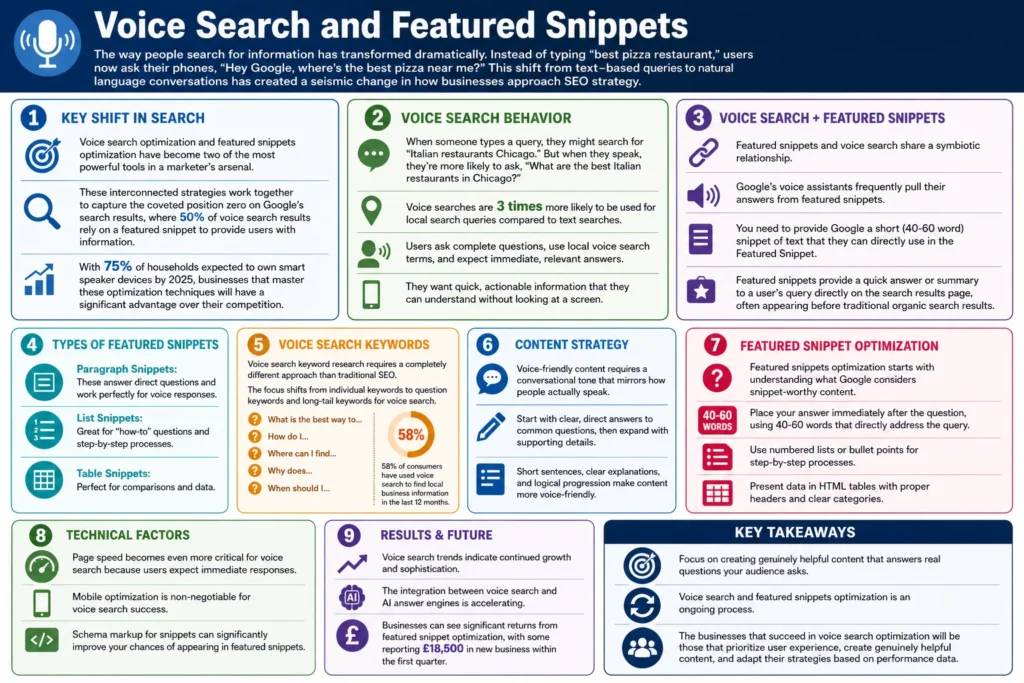
Voice search optimization and featured snippets optimization have become two of the most powerful tools in a marketer’s arsenal. These interconnected strategies work together to capture the coveted position zero on Google’s search results, where 50% of voice search results rely on a featured snippet to provide users with information.
Understanding how to optimize for voice search and secure featured snippets isn’t just about staying current with trends – it’s about meeting your audience where they are. With 75% of households expected to own smart speaker devices by 2025, businesses that master these optimization techniques will have a significant advantage over their competition.
Understanding Voice Search Behavior and Its Impact on SEO
Voice search represents a fundamental shift in user behavior. When someone types a query, they might search for “Italian restaurants Chicago.” But when they speak, they’re more likely to ask, “What are the best Italian restaurants in Chicago?” This difference in phrasing creates entirely new opportunities for businesses to connect with their audience.
The rise of conversational keywords and natural language keywords has changed how we approach keyword research. Traditional SEO focused on short, choppy phrases, but voice SEO requires a deeper understanding of how people actually speak. Users ask complete questions, use local voice search terms, and expect immediate, relevant answers.
Voice searches are 3 times more likely to be used for local search queries compared to text searches, making local optimization crucial for businesses with physical locations. This statistic highlights why “near me searches” have become so important in voice search content strategy.
The mobile voice search optimization aspect cannot be overlooked either. People use voice search when they’re driving, cooking, or have their hands full. This context shapes their queries and expectations. They want quick, actionable information that they can understand without looking at a screen.
The Connection Between Voice Search and Featured Snippets
Featured snippets and voice search share a symbiotic relationship. Google’s voice assistants frequently pull their answers from featured snippets, making position zero SEO crucial for voice search ranking factors. When someone asks their smart speaker a question, the device often reads the answer from a featured snippet.
This connection means that optimizing for featured snippets directly impacts your voice assistant SEO performance. You need to provide Google a short (40-60 word) snippet of text that they can directly use in the Featured Snippet, and this same content often becomes the answer for voice queries.
Understanding the different types of featured snippets is essential for creating voice-friendly content:
- Paragraph Snippets: These answer direct questions and work perfectly for voice responses. They provide concise, definitive answers that smart speakers can read aloud naturally.
- List Snippets: Great for “how-to” questions and step-by-step processes. Voice assistants can read these sequentially, making them ideal for instructional content.
- Table Snippets: Perfect for comparisons and data. While less common for voice search, they can still be valuable for mobile users who combine voice and visual search.
The key to success lies in understanding that featured snippets provide a quick answer or summary to a user’s query directly on the search results page, often appearing before traditional organic search results. This positioning makes them incredibly valuable for both traditional and voice search visibility.
Mastering Voice Search Keyword Research
Voice search keyword research requires a completely different approach than traditional SEO. The focus shifts from individual keywords to question keywords and long-tail keywords for voice search. Instead of targeting “pizza delivery,” you might optimize for “Where can I get pizza delivered tonight?”
The most effective voice search keywords often start with question words:
- What is the best way to…
- How do I…
- Where can I find…
- Why does…
- When should I…
These question-based keywords align perfectly with how people naturally speak. They’re longer, more specific, and often reveal clearer intent than traditional keywords.
Local voice search presents unique opportunities. 58% of consumers have used voice search to find local business information in the last 12 months. This means incorporating location-based phrases and “near me” variations into your content strategy.
| Voice Search Type | Example Query | Content Strategy |
|---|---|---|
| Local Search | “Where’s the nearest coffee shop?” | Include location-specific content and business hours |
| How-To Questions | “How do I change a tire?” | Create step-by-step guides with clear instructions |
| Product Information | “What’s the best smartphone under $500?” | Develop comparison content with specific details |
The beauty of voice search keyword research lies in its connection to real user needs. People ask questions they genuinely want answered, making voice search traffic highly valuable for businesses that can provide relevant, helpful responses.
Creating Voice-Friendly Content That Ranks
Voice-friendly content requires a conversational tone that mirrors how people actually speak. This means using natural language keywords throughout your content while maintaining the expertise and authority that Google values.
The structure of voice-friendly content should anticipate the questions your audience asks. Start with clear, direct answers to common questions, then expand with supporting details. This approach works perfectly for both voice search and featured snippets optimization.
Consider the user’s context when creating content. Voice search users are often multitasking or on-the-go, so your content should be easily digestible when read aloud. Short sentences, clear explanations, and logical progression make content more voice-friendly.
Schema markup plays a crucial role in voice search content strategy. While not directly visible to users, structured data helps search engines understand your content better, increasing the likelihood of appearing in voice search results.
Optimizing for Featured Snippets: Your Path to Position Zero
Featured snippets optimization starts with understanding what Google considers snippet-worthy content. Google’s automated systems select featured snippets based on how well they answer the specific search request and how helpful they are to the user.
The process begins with identifying featured snippet opportunities in your niche. Look for questions your audience asks that currently have featured snippets, then create better, more comprehensive answers. Your goal is to provide the most helpful, accurate response possible.
Answer box SEO requires specific formatting techniques:
- For Paragraph Snippets: Place your answer immediately after the question, using 40-60 words that directly address the query. The answer should be complete and self-contained.
- For List Snippets: Use numbered lists or bullet points for step-by-step processes. Make sure each step is clear and actionable.
- For Table Snippets: Present data in HTML tables with proper headers and clear categories. This format works well for comparisons and specifications.
The key to successful featured snippets optimization lies in providing direct answer keywords that match user intent. Think about the specific questions your audience asks and craft your content to answer them immediately and thoroughly.
Technical Strategies for Voice Search and Featured Snippets
Smart speaker optimization requires attention to technical details that many businesses overlook. Page speed becomes even more critical for voice search because users expect immediate responses. If your page loads slowly, you’ll lose the opportunity to provide voice search answers.
Mobile optimization is non-negotiable for voice search success. Since most voice searches happen on mobile devices, your content must be perfectly formatted for smaller screens and touch interactions.
Schema markup for snippets can significantly improve your chances of appearing in featured snippets. Use FAQ schema for question-and-answer content, HowTo schema for instructional content, and Local Business schema for location-based queries.
The People Also Ask optimization strategy involves identifying related questions that appear in Google’s “People Also Ask” boxes. By answering these questions within your content, you increase your chances of appearing in multiple featured snippets.
Advanced Tactics for Voice Search Ranking Factors
Voice search ranking factors differ from traditional SEO in several key ways. Domain authority and page authority remain important, but content relevance and user experience carry more weight for voice queries.
The conversational nature of voice search means that content must sound natural when read aloud. This includes using contractions, shorter sentences, and a more relaxed tone than traditional SEO content.
Local SEO signals become amplified for voice search. Ensure your Google My Business listing is complete, accurate, and regularly updated. Encourage customer reviews and respond to them promptly, as these factors influence local voice search rankings.
Page experience signals, including Core Web Vitals, impact voice search performance. Fast-loading pages with good user experience metrics are more likely to be selected for voice search results.
Voice Search Best Practices for Different Industries
Different industries require tailored approaches to voice search optimization. Healthcare businesses should focus on symptom-related questions and treatment information, while restaurants should optimize for menu inquiries and location-based searches.
E-commerce sites benefit from product-specific voice search optimization. Questions like “What’s the best for [use case]?” drive valuable traffic and often lead to purchases.
Service-based businesses should focus on process-related questions and local optimization. “How much does [service] cost?” and “Who provides [service] near me?” are common voice search queries in service industries.
Measuring Voice Search and Featured Snippets Success
Tracking voice search performance requires a combination of traditional SEO metrics and voice-specific indicators. While you can’t directly measure voice search traffic, you can monitor increases in organic traffic for question-based keywords and featured snippet appearances.
Google Search Console provides valuable insights into which queries trigger featured snippets for your site. Monitor these closely and optimize similar content to capture more snippet opportunities.
Voice search statistics show that businesses can see significant returns from featured snippet optimization, with some reporting £18,500 in new business within the first quarter from improved snippet performance.
The Future of Voice Search and Featured Snippets
Voice search trends indicate continued growth and sophistication. As AI models improve, our devices will process our requests better and, in turn, deliver more accurate responses and actions. This evolution means that voice search optimization will become even more important for businesses.
The integration between voice search and AI answer engines is accelerating, creating new opportunities for businesses that adapt their content strategies accordingly. Those who master voice search optimization now will be well-positioned for future developments in search technology.
At a Glance
Taking Action: Your Voice Search and Featured Snippets Strategy
Success in voice search optimization and featured snippets requires a strategic, long-term approach. Start by auditing your current content for voice search opportunities, then gradually implement the techniques outlined in this guide.
Focus on creating genuinely helpful content that answers real questions your audience asks. This approach naturally aligns with both voice search best practices and featured snippets optimization, creating a powerful synergy that drives results.
Remember that voice search and featured snippets optimization is an ongoing process. Search algorithms continue to evolve, user behavior changes, and new opportunities emerge regularly. Stay informed about voice search trends and adjust your strategy accordingly.
The businesses that succeed in voice search optimization will be those that prioritize user experience, create genuinely helpful content, and adapt their strategies based on performance data. By implementing these techniques systematically, you’ll be well-positioned to capture the growing voice search audience and dominate featured snippets in your industry.
For a complete understanding of technical optimization, read my Technical SEO Guide.
Ready to transform your SEO strategy? Start by identifying the questions your audience asks most frequently, then create content that provides clear, helpful answers. The voice search revolution is here – make sure your business is ready to be heard.
Want more local customers to find you? Check out my local SEO package and let’s boost your local visibility today!
For any queries, feel free to contact me.